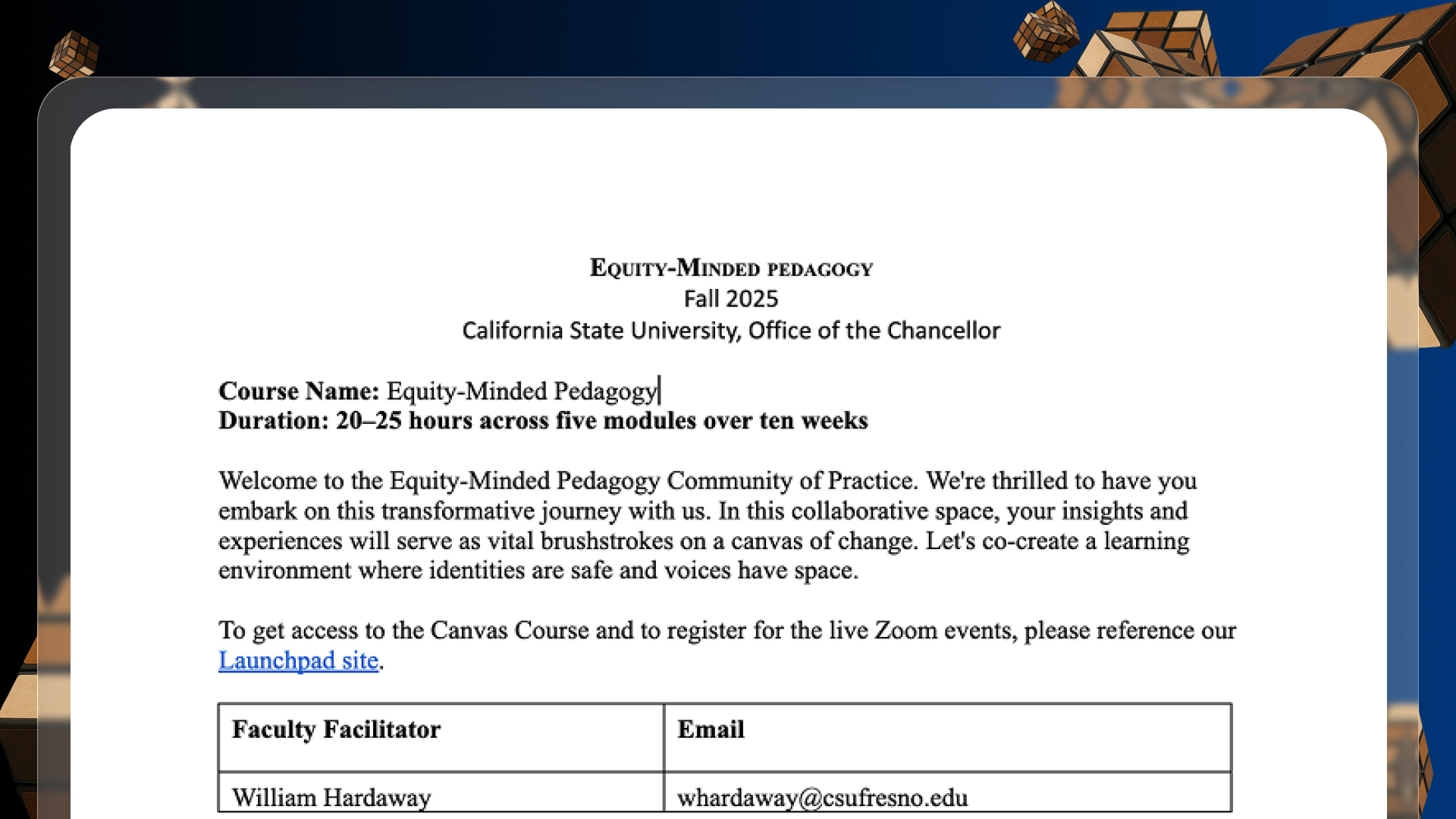
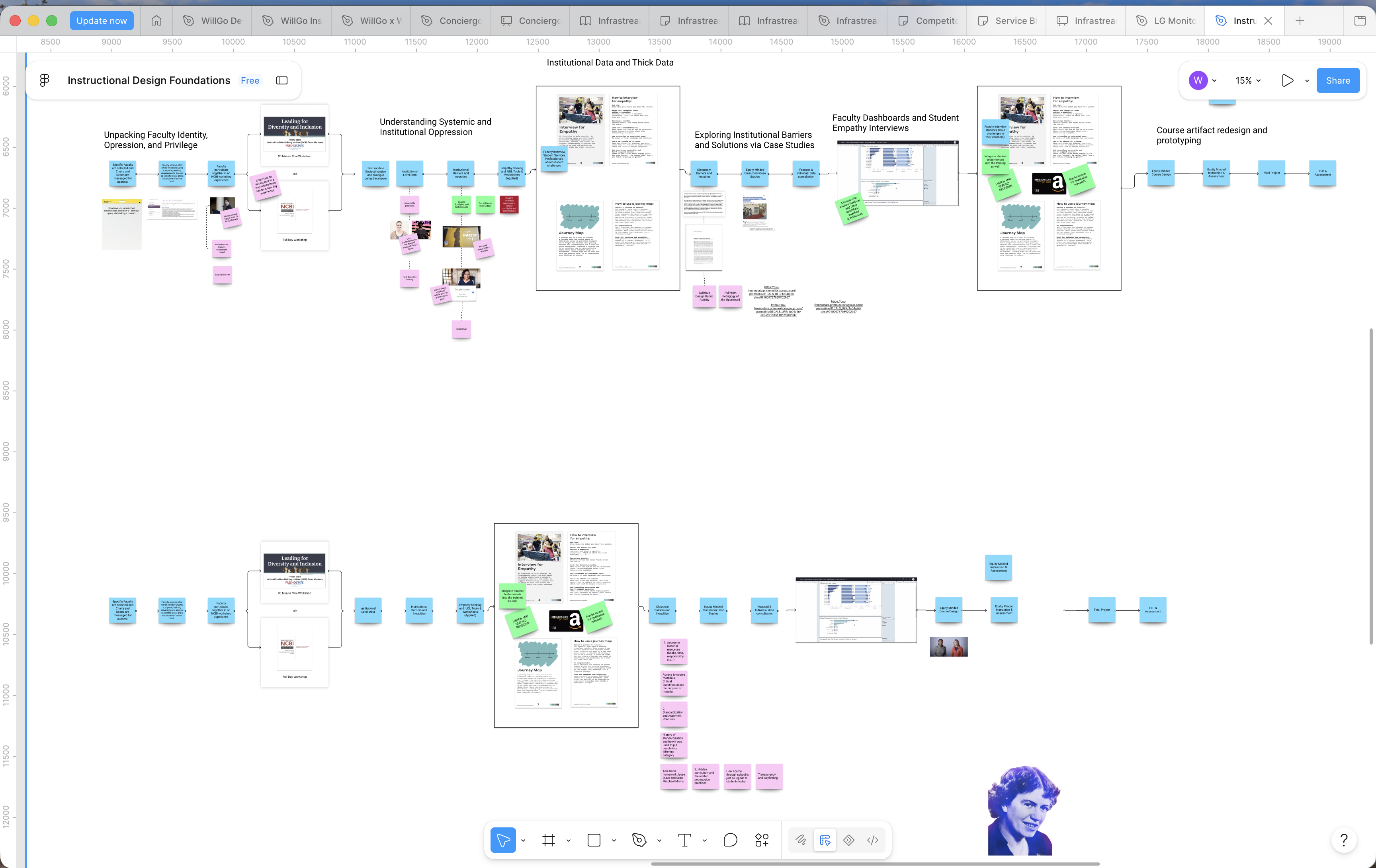
I used empathy interviews and collaborative prototyping sessions to shape the curriculum, activities, and facilitation model. After the interviews two distinct outlines for the course were produced as prototypes (pictured below) and tested with faculty, students, and professional staff.
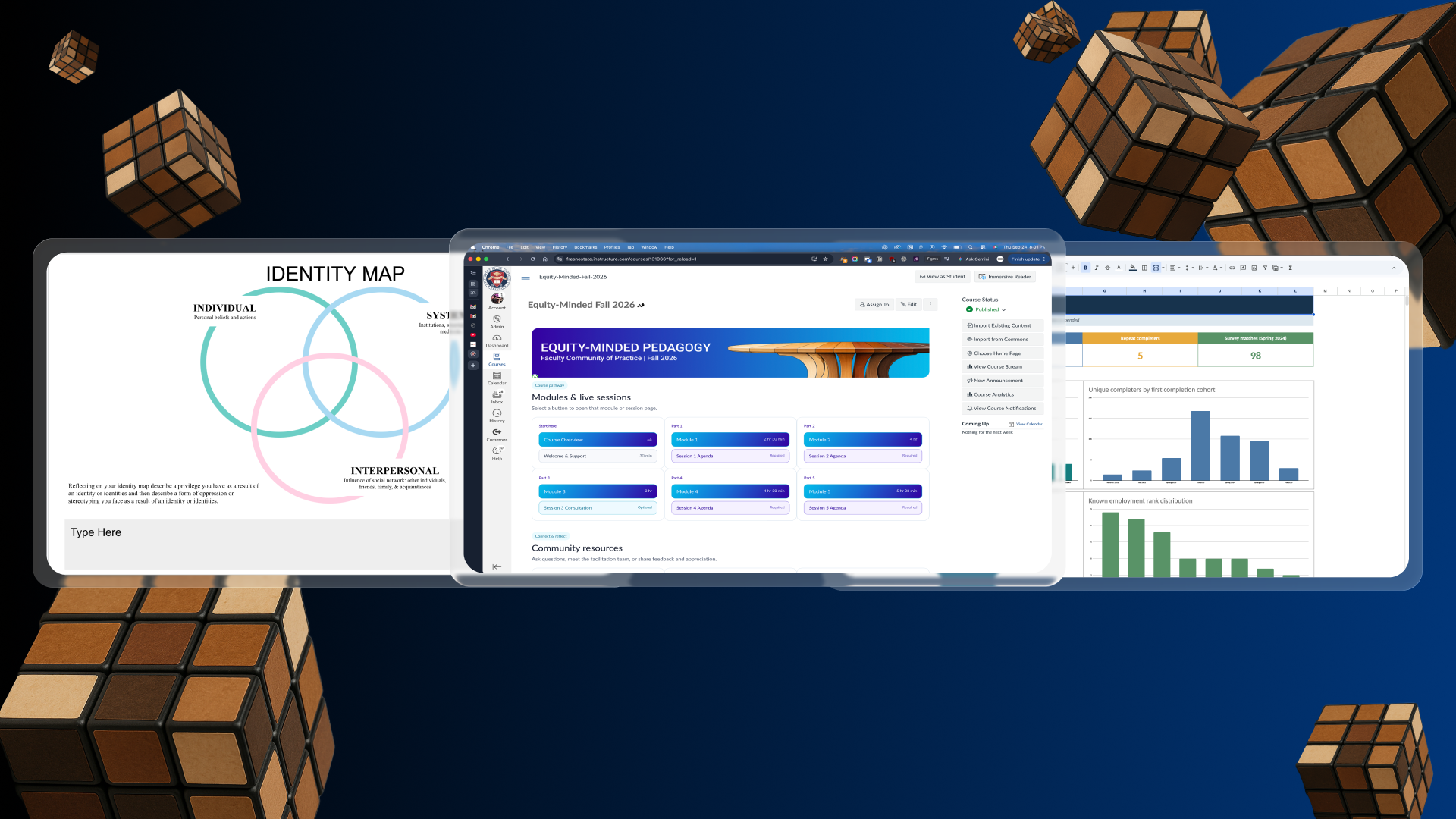
The chosen course was structured around a progression from identity and systems thinking to institutional data, student experience, course evaluation, and prototyping for change. Faculty learned through applied activities including identity mapping, systems mapping, empathy interviews, journey mapping, syllabus review, institutional data analysis, and prototype development.
The underlying approach emphasized participation, reflection, structural critique, and shared learning rather than a traditional one-to-many training model.
The teaching model intentionally mirrored the practices faculty were being asked to use with students. Rather than relying on lecture alone, sessions used modeling, guided practice, structured reflection, peer discussion, small group activities, live visual collaboration, collaborative sense-making, and feedback cycles.
Faculty were regularly asked to do something with the content: map an identity, interpret data, analyze a system, interview a student, evaluate a syllabus, build a journey map, or prototype a course change. Facilitators then used whole-group debriefs, follow-up questions, and peer feedback to help participants make meaning from those activities.
Faculty did not simply learn about student voice, data-informed teaching, or iterative design. They interviewed students, analyzed campus data, evaluated their own courses, developed prototypes, and received feedback from peers.
This created alignment between learning objectives, teaching methods, activities, assessment, and transfer to practice.
As EMP expanded, the challenge became how to maintain participation and reflection in a large online environment.
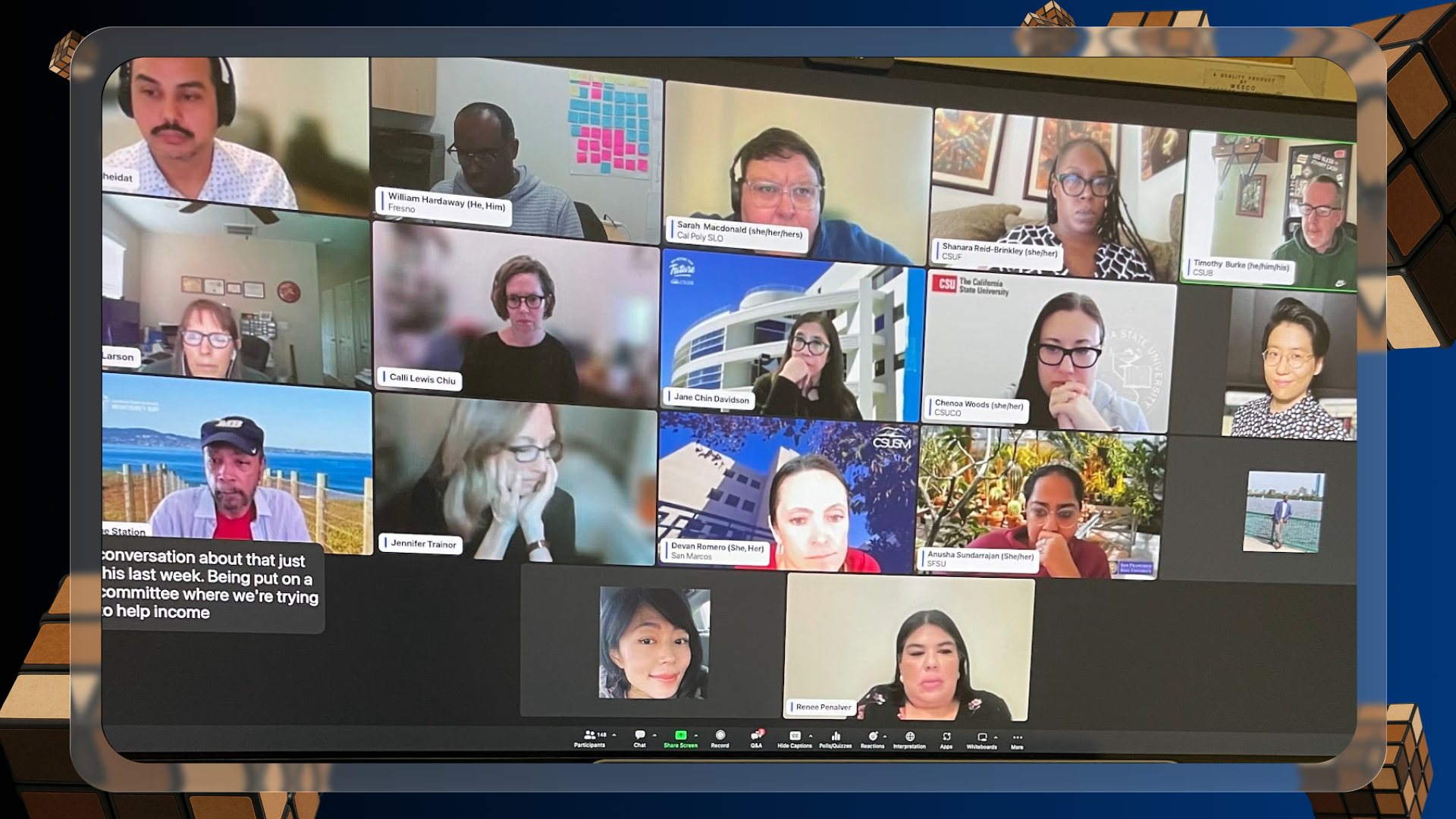
I designed and facilitated synchronous sessions that moved between direct instruction, expert panels, individual reflection, chat participation, breakout discussions, collaborative activities, and whole-group synthesis.
The experience relied on a coordinated facilitation system with main facilitators, subject-matter experts, breakout facilitators, chat and Canvas moderators, Zoom moderators, and timekeepers.
The cohorts totaled 400 actively engaged faculty across multiple campuses and disciplines.