
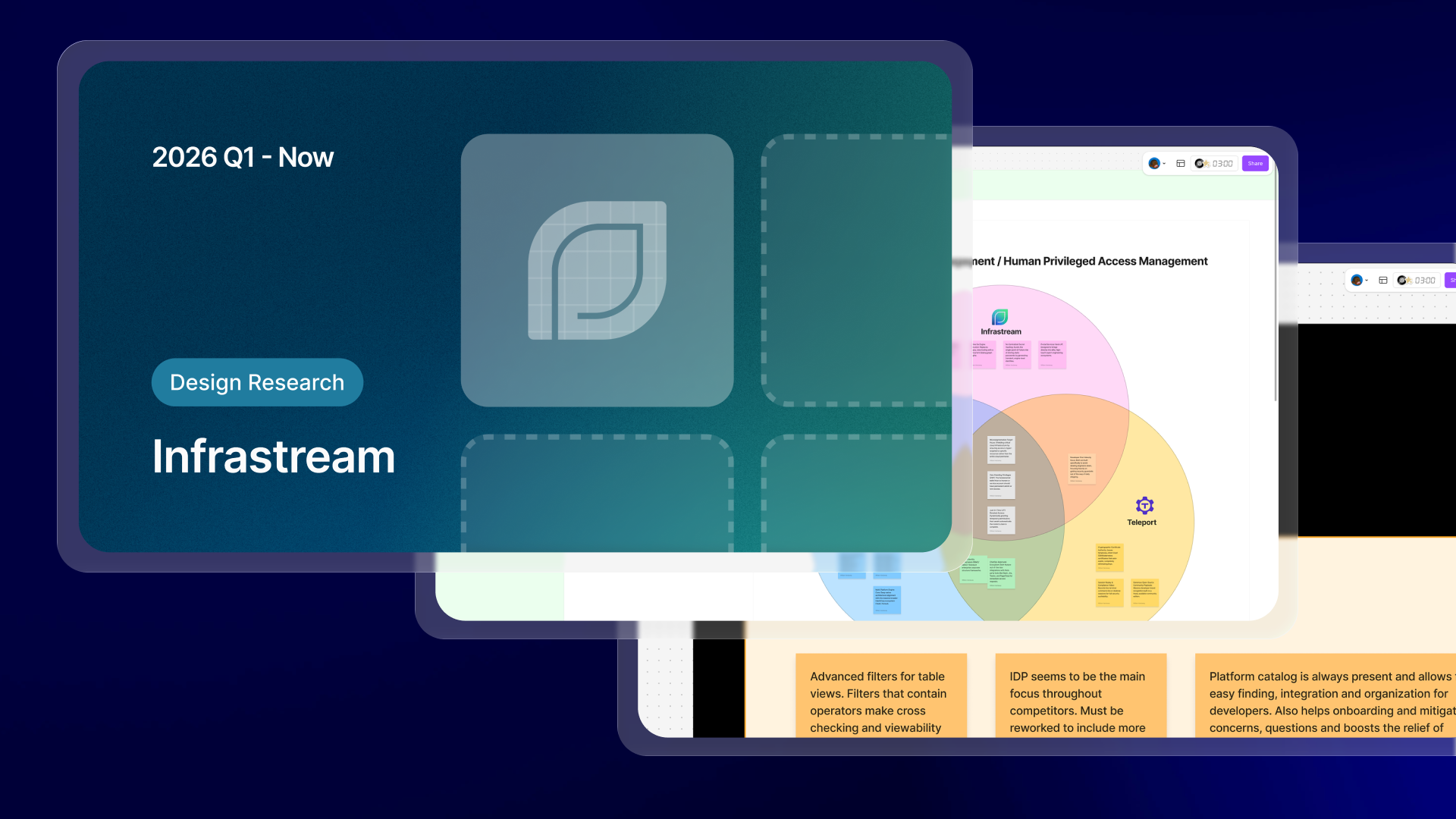
Understanding the Infrastructure LandscapeBefore defining the product experience, we conducted design research and analyzed competing infrastructure, identity, and privileged-access management platforms.
We examined how existing products organize resources, communicate system status, support onboarding, present technical information, and help teams investigate problems. We also compared the patterns that appeared consistently across platforms with the areas where Infrastream could offer something meaningfully different.
The research revealed several recurring needs. Technical teams need advanced filtering and cross-checking capabilities, clear visibility across related infrastructure, and a reliable way to understand how resources, permissions, and operations affect one another.
It also reinforced the importance of a connected platform catalog. Making systems easier to find, integrate, and organize could reduce onboarding friction while giving teams a clearer understanding of the infrastructure available to them.
These insights helped us define the product strategy and determine which workflows needed to feel familiar and which ones required a new approach.
Testing More Than Interface UsabilityI led user testing and synthesis to evaluate whether people could understand the product’s purpose, explain its value, and navigate the experience with confidence.
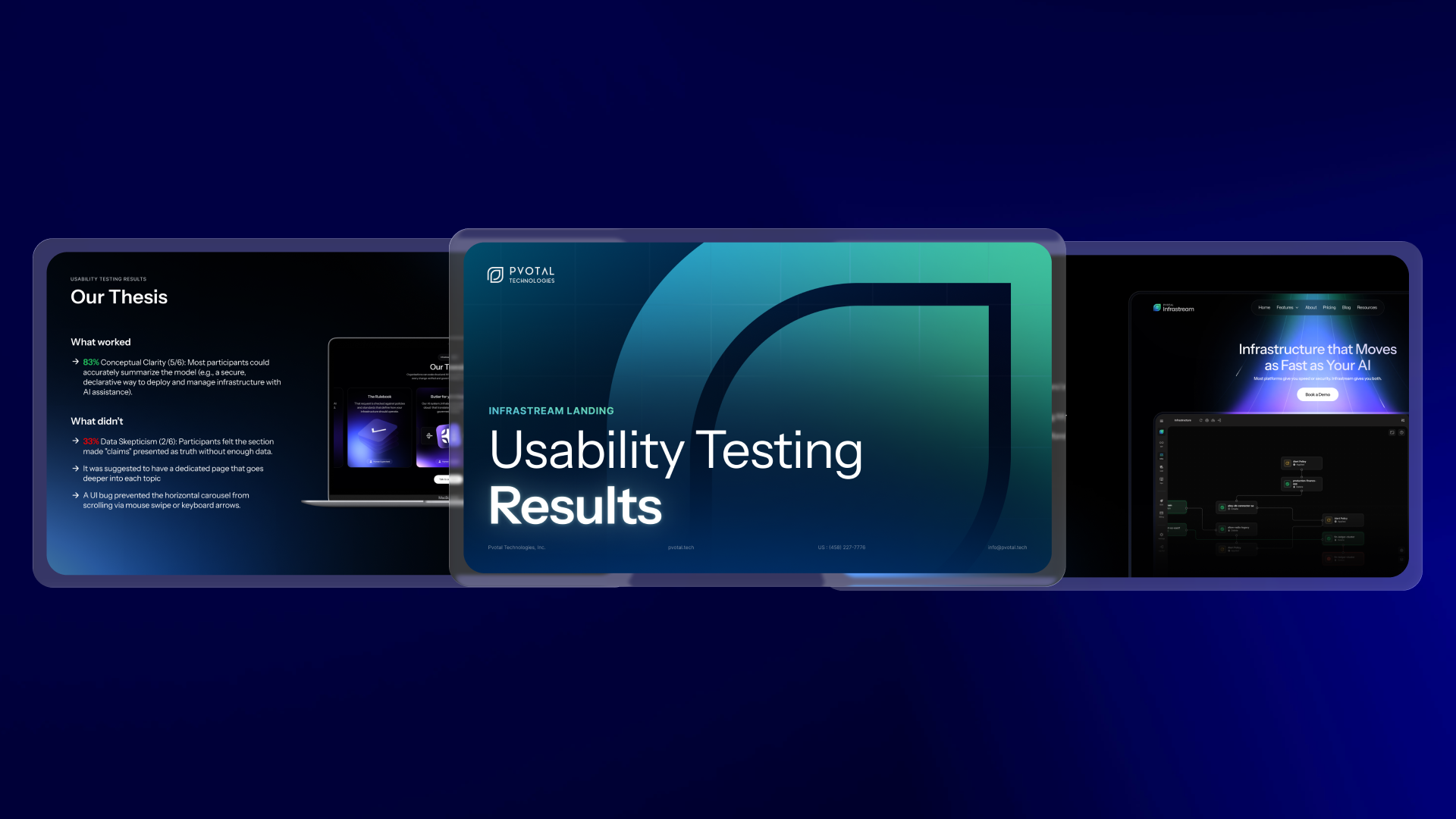
The testing showed that 83 percent of participants, five out of six, could accurately summarize the concept as a secure and declarative way to deploy and manage infrastructure with AI assistance. This gave us evidence that the central product model was understandable.
The sessions also exposed areas that needed more work. Two of the six participants questioned whether the product’s claims were supported by enough visible evidence. Instead of treating that as a messaging problem alone, we recognized it as a trust problem. The experience needed to show more of its reasoning, data, and technical foundation so users could understand why they should believe the results.Testing also uncovered a navigation issue in the AI-generated interface. A horizontal carousel was difficult to move through with common mouse and keyboard interactions. That finding helped us refine the interaction instead of allowing a visually impressive element to interfere with usability.
The research validated the larger direction while giving us specific changes to make across the content, workflows, and interface.
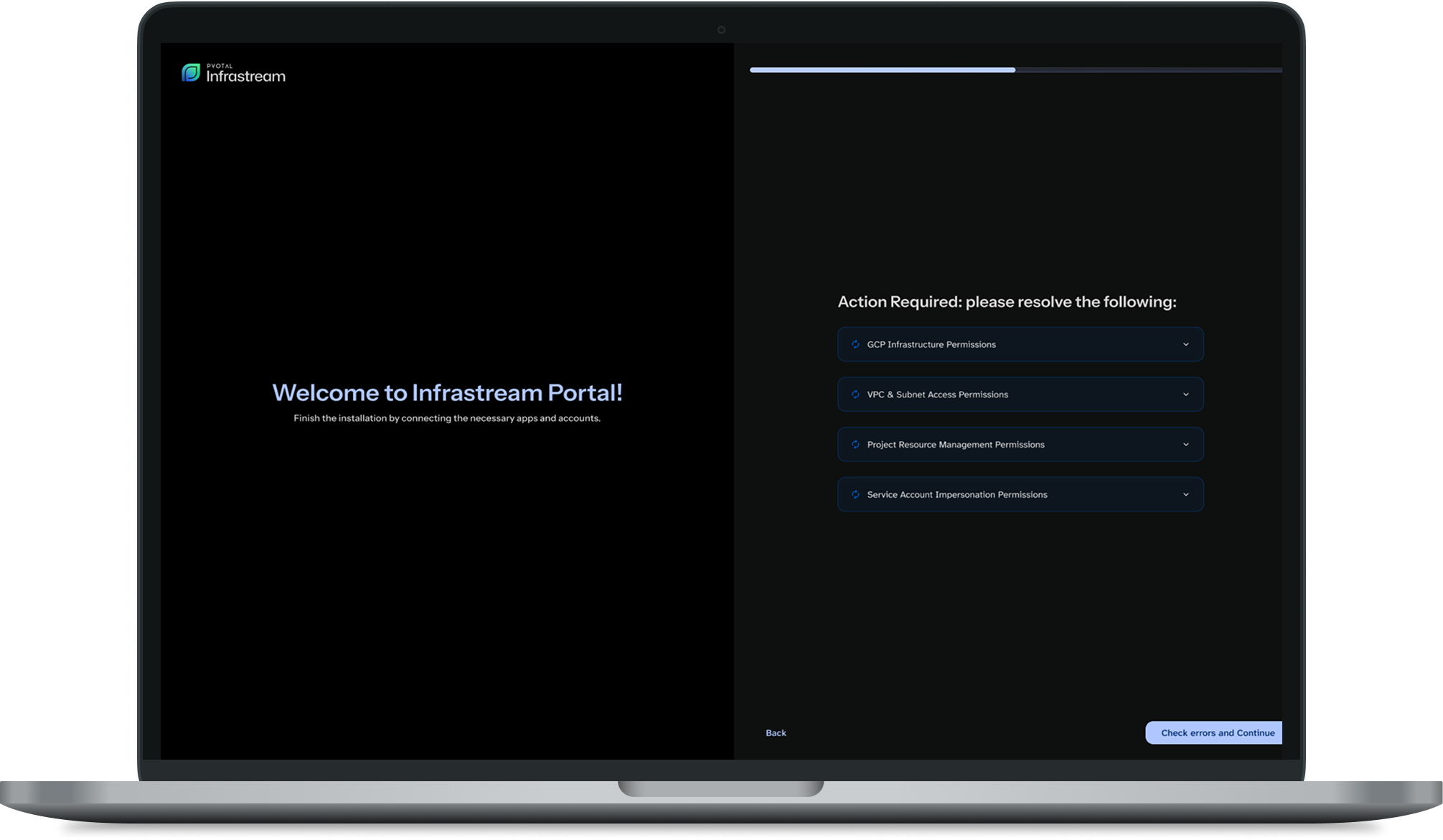
Guiding Teams Through Complex SetupInfrastructure products begin building trust before users ever reach the main dashboard. Connecting cloud environments, service accounts, permissions, and project resources can create significant friction during onboarding.We designed the setup experience to turn those technical requirements into a visible sequence of actions.Instead of leaving users to interpret documentation and resolve missing permissions on their own, the interface identifies the areas requiring attention, groups related issues, and gives teams a way to check their progress before continuing.
This approach makes the onboarding process more understandable while establishing an important product principle: Infrastream should not simply report that something is wrong. It should help users understand what needs attention and what they can do next.
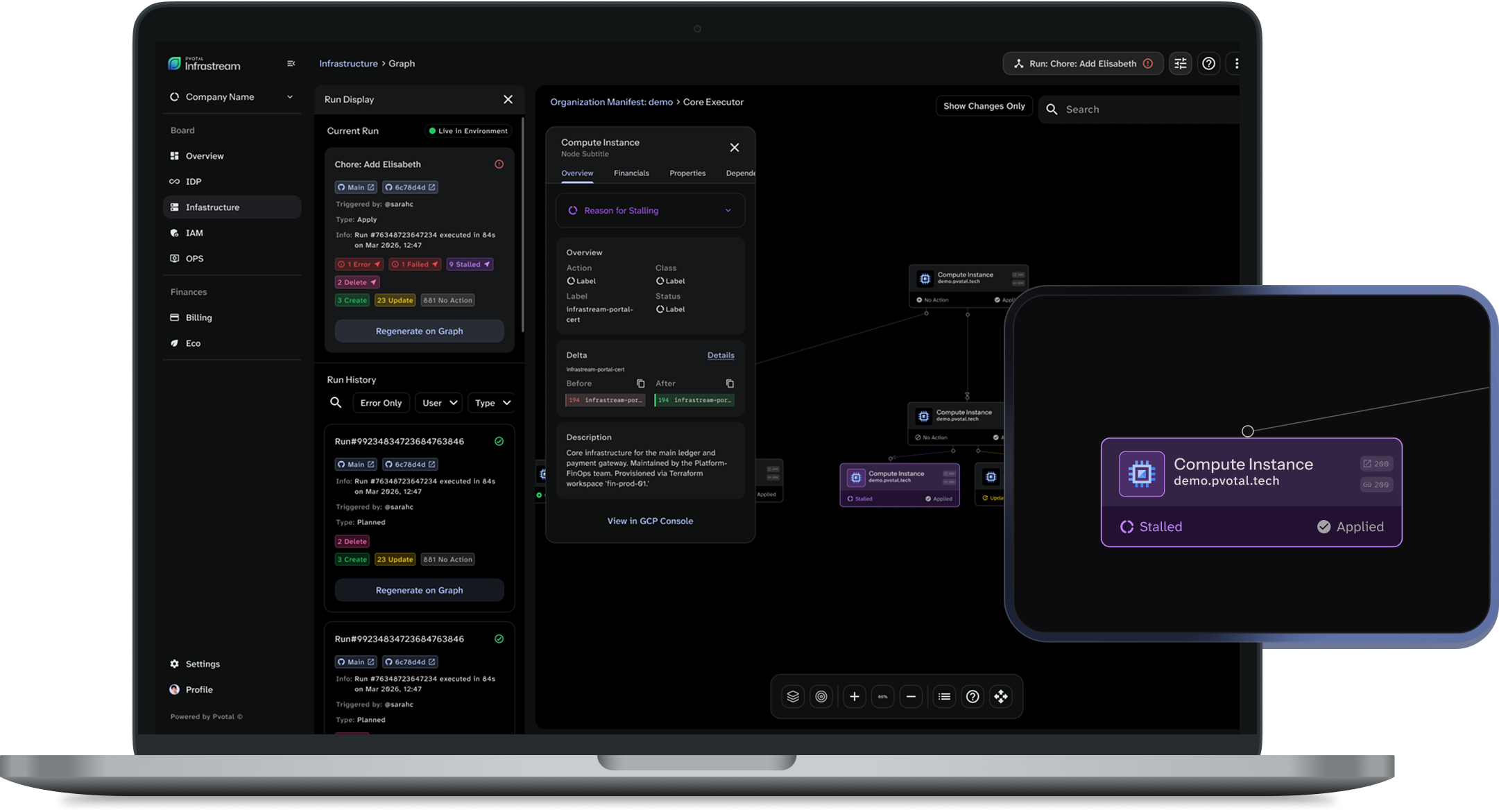
Moving the Product ForwardThe resulting product direction connects high-level infrastructure visibility with the detailed information teams need to investigate individual resources and runs.
The graph makes relationships visible. Run histories make changes traceable. Diagnostic panels provide context around failures and stalled resources. Guided onboarding helps teams resolve configuration and permission issues before they become larger problems.
Together, these features create an infrastructure-management experience designed to help technical teams move from complexity to clarity, and from noticing a problem to understanding what action to take.
Our research and testing validated the product’s central direction while revealing where the experience needed stronger evidence, clearer content, and more usable interactions. Those findings shaped subsequent workflows and interface decisions as Infrastream continued moving toward launch and investment.

