Challenge
How might we help an academic team move from empathy and individual observations to a shared understanding of the student experience and a practical set of opportunities for change?
IMPACT
Participants left with a portfolio of student journey maps, shared insight into emotional and identity-related moments across the student experience, and a prioritized set of opportunities to explore through prototypes and future action.
SOLUTION
I designed and facilitated a three-part Journey Mapping 101 workshop series for Loyola Marymount University’s School of Education. The experience combined empathy interviews, collaborative journey mapping, synthesis, prioritization, and low-fidelity prototyping.
Loyola Marymount University’s School of Education wanted to strengthen its ability to understand and improve the experiences students have while navigating the institution.
The challenge was not a lack of care. Faculty and staff already held valuable observations about where students struggled, felt supported, or encountered unnecessary friction. The opportunity was to turn those individual observations into a shared picture of the student experience, then use that picture to identify where change could make the greatest difference.
I designed Journey Mapping 101 as a three-part learning and working series. Rather than treating journey mapping as a diagramming exercise, I treated it as a way to build empathy, surface patterns, and make better decisions together.
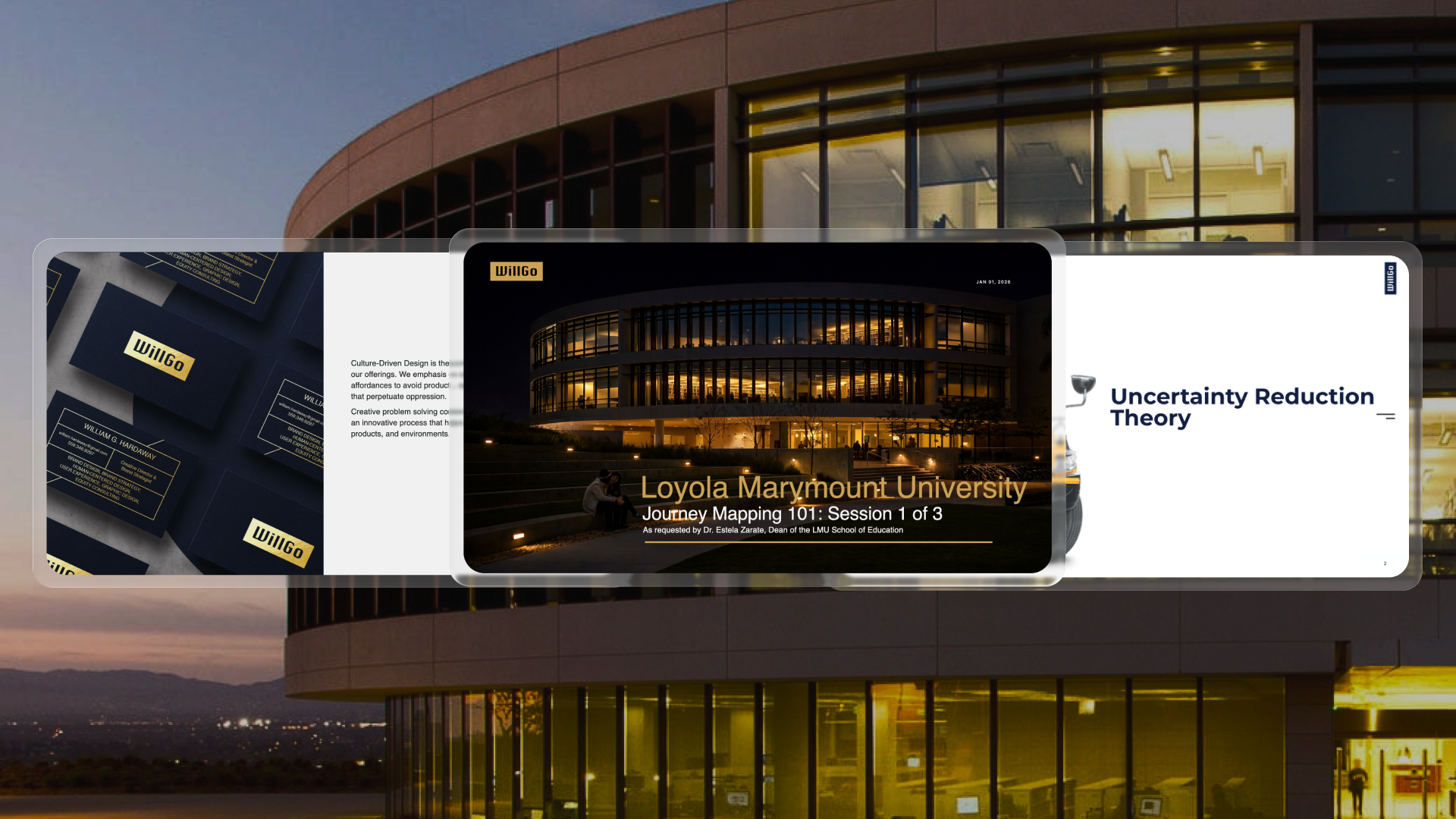
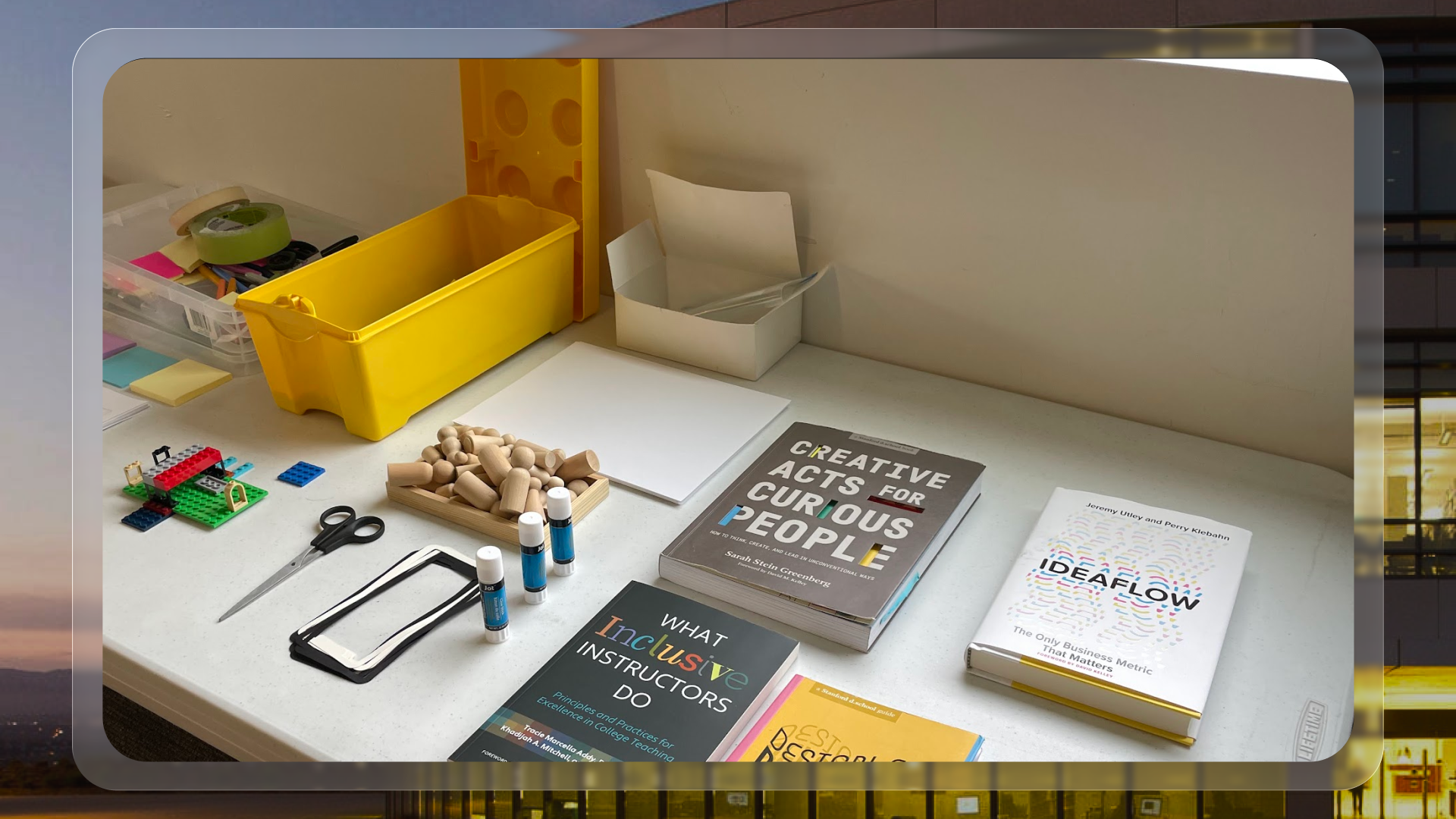
I began by building a common language for human-centered design, empathy, and journey mapping. At an in-person workshop on the beautiful Loyola campus participants reflected on salient aspects of their own identities and revisited the role identity can play in how people experience the same institution differently. We then joined together in learning the skill of journey mapping student stories by interactively mapping our own.
I then prepared participants to conduct empathy interviews and document the lived experiences behind student journeys. This ensured the maps would be grounded in what students actually said, felt, and encountered rather than assumptions about what their experience should be.
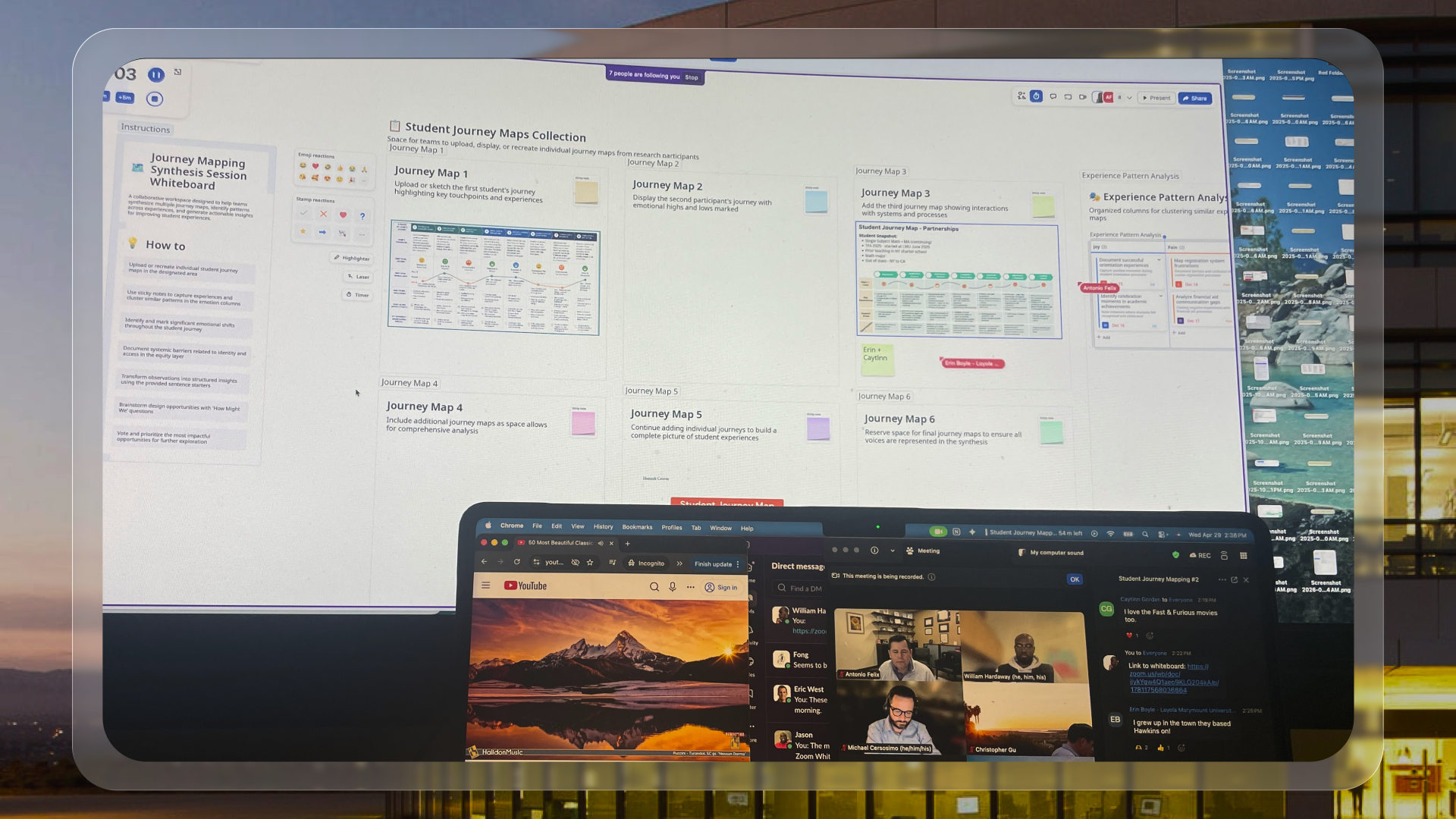
In the second session, participants brought their journey maps into a shared digital workspace. Together, we examined key moments, emotional highs and lows, pain points, and patterns across multiple student experiences.
The goal was to move from isolated stories to evidence-based insight. I helped the group identify where policies, communication, processes, relationships, and institutional expectations shaped the journey in ways that were not always visible from inside the organization.
In the final session, the group transformed insight into action. Participants prioritized opportunities based on impact and feasibility, then developed low-fidelity prototypes to test assumptions and continue learning.
The result was not a final answer to every challenge facing students. It was a stronger team practice for listening, making sense of experience, and designing thoughtful responses together.